
 Valuations
 Surveying
 Advice & consultancy
18 March 2023
Can I split land without subdividing it?
A plot of land can be redistributed in two ways:
- Dividing land without the need for a prior environmental permit is called land splitting.
- If an environmental permit is required, we refer to it as subdivision.
The purpose of the division and the applicable regulations determine whether land is split or subdivided.
Would you like to have your land split or subdivided?
Look no further, trust the CC experts.
Contact us for more information or request a free, no-obligation quote.
Read below to explore the key differences between land splitting and land subdivision.
What is land splitting?
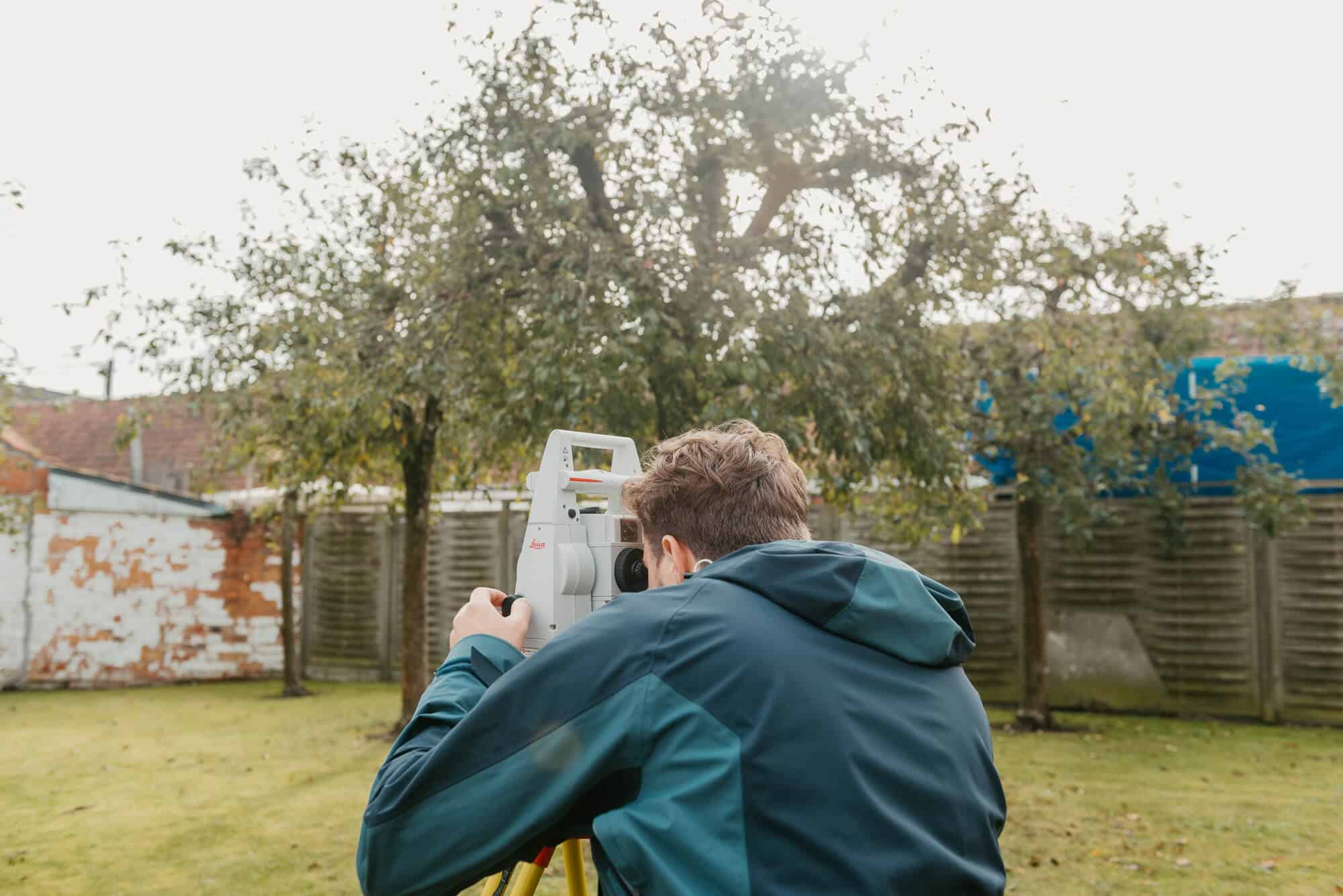
Land splitting means dividing a parcel (whether built on or not) into new lots without the need for a prior environmental permit. Some practical examples of land splitting, often based on a surveyor’s measurements, include:
- The land split or partition of a garden, with the intention of keeping it as garden land (Exception: if the garden lies within an active subdivision, an adjustment to that subdivision is required before splitting is allowed)
- The land split or partition of industrial land
- The land split or partition of agricultural land
- The land split or partition of pasture land
- The land split or partition of non-buildable land

How does a land split work?
A surveyor begins by measuring the site and preparing a land split plan. Through the pre-cadastration procedure, the new layout is reported to the cadastre. The surveyor then forwards both the plan and the pre-cadastration to the notary.
At least 20 calendar days before the notarial deed is executed, the notary must submit the plan to the municipal executive board (mayor and aldermen). The council may issue comments on the proposed division, which the notary is required to include in the deed. While these remarks often provide useful insights into planning restrictions affecting the land, the council does not have the authority to block the division. The subdivision only becomes legally effective once the notarial deed has been executed and registered with the cadastre.
Whenever possible, CC Experts’ surveyors recommend land splitting. The procedure is administratively simpler than subdivision, quicker to complete, and considerably less costly.
What is a subdivision?
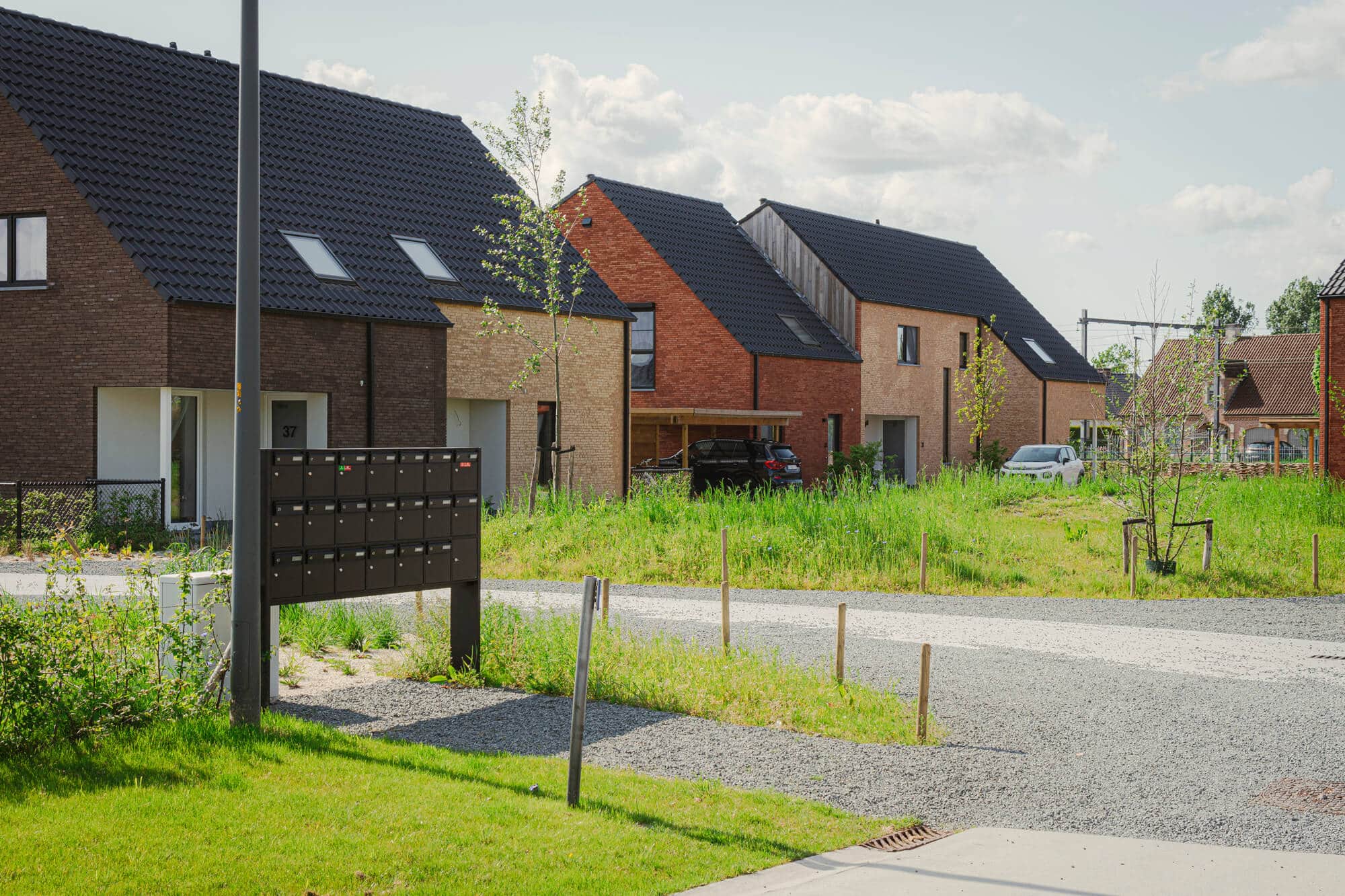
Subdivision refers to dividing land (built or unbuilt) with the intention of selling it as building plots. In this case, a prior environmental permit is required. The permit ensures legal certainty that the new parcels can be developed. A similar permit requirement applies to other transfer types, such as leases exceeding nine years, establishing leasehold rights, or creating building rights.

How does a subdivision work?
A surveyor can apply for the environmental permit to subdivide land. The process involves:
- Measuring the existing condition of the land
- Determining the exact property boundaries
- Preparing a design that shows both the current layout, the proposed new plots, and the subdivision regulations
- Submitting the application digitally via the environmental portal
Once the subdivision permit is granted and enforceable, CC Experts’ surveyors assist clients with the next steps, such as:
- Supervising any works (e.g., tree felling, demolition, construction of roads, infrastructure, or utilities)
- Applying for pre-cadastration
- Requesting a certificate of marketability
The surveyor’s role is complete once the new building plots have been officially demarcated.
What is a single-lot subdivision?
On December 30, 2019, a relaxation of the rules was introduced that allowed a garden strip to be split off without requiring an environmental permit, even if the intention was to also build on the new piece of land. However, by judgment of the Constitutional Court (No. 80/2019) of May 23, 2019, this relaxation was annulled, giving rise to the concept of a single-lot subdivision.
In a single-lot subdivision, one plot (for example, a garden strip) is separated from a developed parcel with an environmental permit, with the aim of selling the undeveloped plot as building land. The permit requirement also applies to other forms of transfer, such as leases exceeding nine years, the creation of a long leasehold, or a building and planting right, if the purpose is to split off a plot from a developed parcel for residential construction.
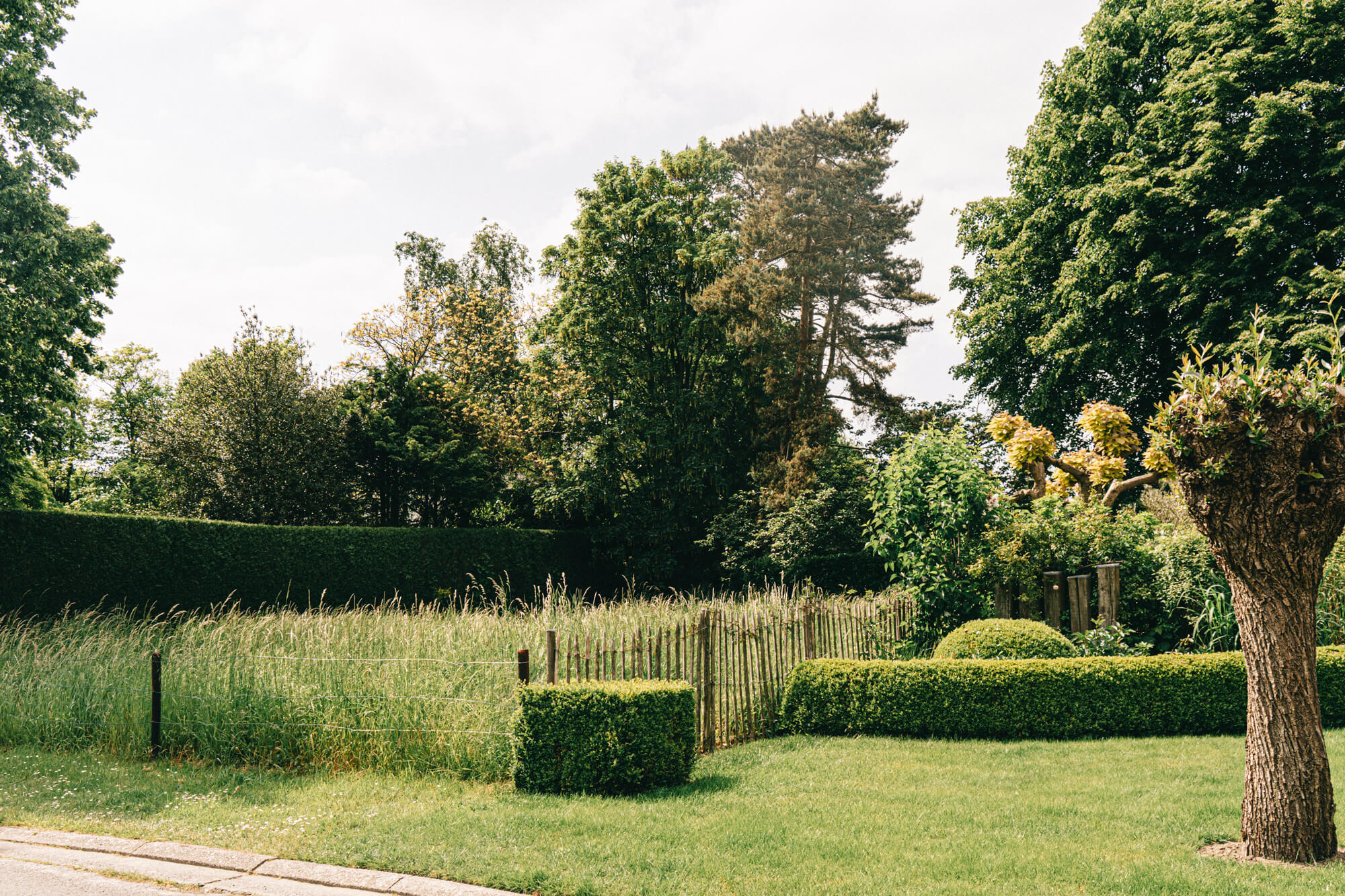
In practice, a single-lot subdivision is often relevant in villa neighborhoods with large parcels of land, where a garden strip can be split off with an environmental permit to be sold as building land. In such cases, however, municipal building regulations must always be observed when applying for a single-lot subdivision. For example: land located in the woonpark (residential park zoning) of the East Flemish municipality of Sint-Martens-Latem can only be subdivided if the new plots are at least 3,000 m² in size.
Our references
- Surveying, subdivision, and pre-cadastration of 3 hectares of project land in Ghent (The Loop)
- Subdivision and pre-cadastration of land into 12 building lots in Lievegem
- Subdivision and pre-cadastration of land into 2 building lots in Ghent
- Preparation of a single-lot subdivision in Sint-Martens-Latem
- …
Want to know more about splitting or subdividing land?
Since every project is unique, we tailor our services to your specific needs and requirements.
Get in touch for more information or request a no-obligation quote.